
Keeping your attic cool in summer – these tips will help you succeed

When summer arrives, many homeowners notice the same problem: the attic apartment quickly turns into a sauna. Rooms directly under the roof heat up faster than any other part of the house. If your bedroom is located in the attic, warm nights can make it difficult to sleep comfortably. The good news is that there are several effective ways to keep your attic cool in summer. From proper insulation and smart roof window solutions to ventilation strategies and sun protection, the right measures can significantly improve the indoor climate in attic spaces. In this guide, we explain how to prevent overheating and create a comfortable loft living environment, even during the hottest months.

Roto_cooling_the_attic7

Why attic apartments overheat in summer?

Attic spaces are particularly prone to overheating. The reason lies in their direct proximity to the roof surface, which absorbs solar heat throughout the day.

There are two main factors that increase temperatures in attic rooms:

  • Solar heat entering through the roof and roof windows
  • Warm air rising from lower floors

As heat naturally rises, warm air accumulates under the roof. Without proper insulation and ventilation, indoor temperatures can increase rapidly.

For this reason, effective  heat protection should always be considered when planning a new home or renovating an attic apartment.

Attic insulation: the key to keeping your loft cool

One of the most effective ways to cool an attic naturally is proper roof insulation. Good insulation works year-round: it keeps heat outside during summer and prevents heat loss during winter.

Choosing the right insulation materials is therefore essential when designing or renovating an attic apartment.

Important insulation factors to consider

Low thermal conductivity

High-quality insulation materials should have low thermal conductivity. This means they slow down heat transfer and act as a barrier against summer heat entering through the roof.

At the same time, these materials help keep warm air inside during winter, improving the building’s energy efficiency and reducing heating costs.

High bulk density

Effective summer heat protection also depends on the density of the insulation material. Materials with high bulk density absorb heat and release it slowly. This delays the heating of attic rooms and keeps indoor temperatures more stable.

Combining insulation materials

In practice, many insulation materials offer either strong insulation or high density – but not both. For optimal results, combining different materials can be very effective.

A common solution is:

  • mineral wool insulation between the rafters
  • wood fibre boards or mats installed below the rafters

This layered structure slows down heat transfer and helps keep your attic apartment cooler for longer.

Sustainable option: Green roofs

Another innovative solution is a green roof. Vegetation on the roof surface reduces heat absorption and improves insulation performance.

Keeping your attic cool without air conditioning

Not every attic was built with optimal insulation. If your home already exists, adding insulation later can be expensive because it often requires structural renovation.

Fortunately, there are also simple everyday measures that help reduce heat in attic spaces.

Below are practical tips for cooling your attic naturally without air conditioning.

Tip 1: Use sun protection for roof windows

Roof windows are essential for bringing natural daylight into attic apartments, but they can also allow solar heat to enter the room.

The most effective way to prevent this is by installing external sun protection for roof windows.

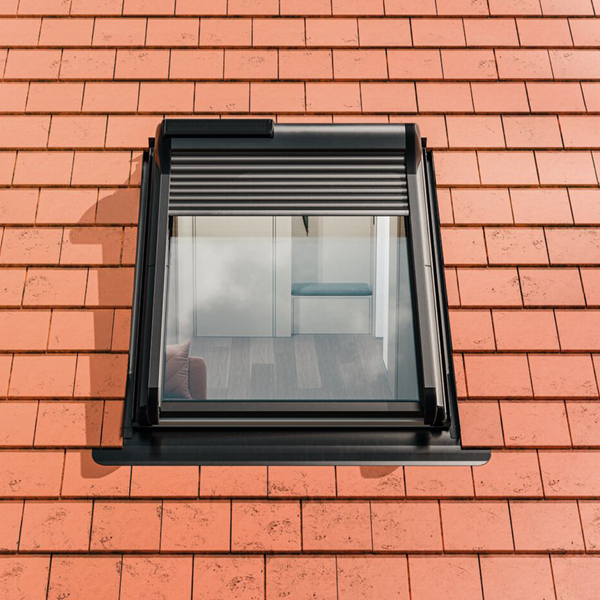
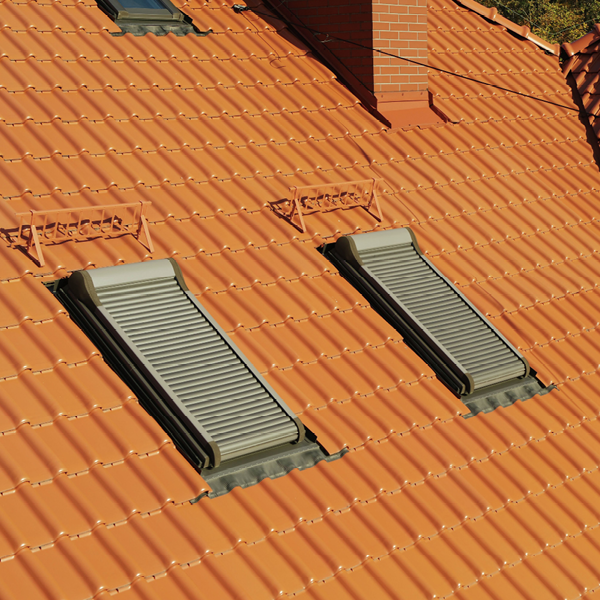
External roller shutters

External roller shutters block sunlight before it reaches the glass surface. This significantly reduces heat gain inside the room.

They also provide additional benefits:

  • improved insulation in winter
  • noise reduction
  • complete blackout for bedrooms

External awnings

External awnings are another effective roof window heat protection solution. Unlike roller shutters, they allow natural daylight into the room while preventing overheating.

This makes them particularly suitable for:

  • home offices in attic spaces
  • living rooms under the roof
  • workspaces that require natural light

Insect protection blinds for summer ventilation

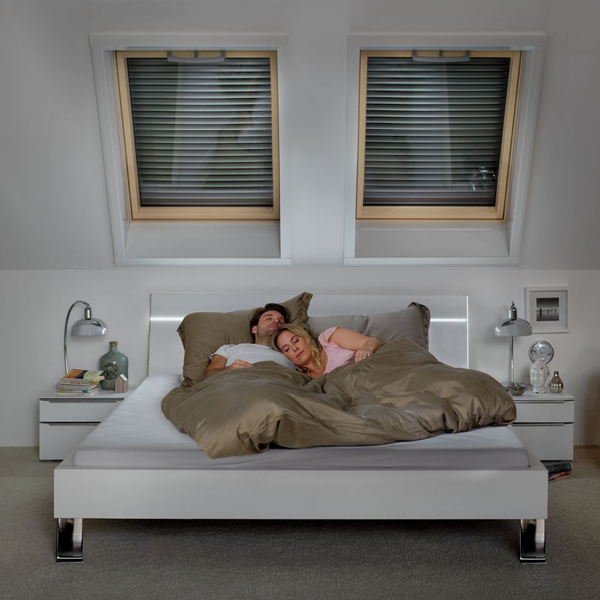
Warm summer nights often require sleeping with open windows. Installing insect protection blinds for roof windows allows fresh air to enter while keeping insects outside.

Internal blackout blinds

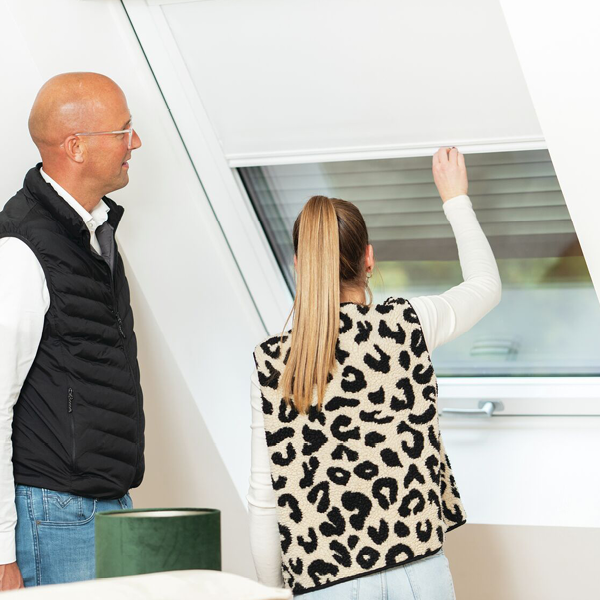
If external sun protection cannot be installed, internal blackout blinds are a useful alternative. Many modern blinds feature reflective coatings that reduce solar heat gain and slow down room heating.

Quick DIY sun protection

For temporary solutions, reflective films applied to the inside of the window can help reduce sunlight.

Even simple methods such as placing cardboard cut to the window size inside the frame can temporarily block solar radiation and reduce heat buildup.

Tip 2: Ventilate properly to cool attic rooms

Correct attic ventilation plays a crucial role in temperature control.

During hot summer days, it is best to keep windows closed and only ventilate during cooler periods:

  • early in the morning
  • late in the evening
  • during the night

This allows cooler outside air to replace warm indoor air.

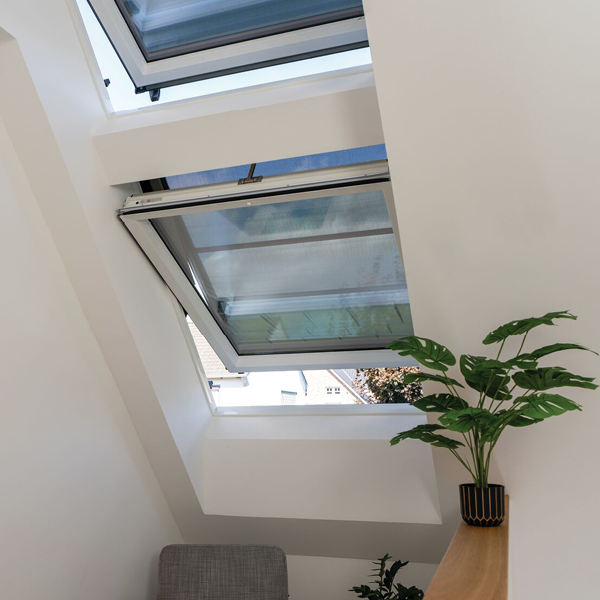
For the best results, create cross ventilation by opening windows on opposite sides of the room or building. This increases airflow and speeds up the exchange of air.

Tip 4: Use fans for air circulation

Fans are a popular solution for improving comfort in hot attic rooms. While they do not actually lower the room temperature, they create air movement that produces a cooling effect on the skin.

However, fans also consume electricity and produce some heat.

A more effective option can be evaporative cooling fans. These devices add small amounts of water to the airflow. As the water evaporates, it absorbs heat energy from the room and slightly reduces the temperature.

Healthy indoor air

Proper ventilation also improves indoor air quality by removing stale air and pollutants. At the same time, it helps prevent mould growth, which can occur in poorly ventilated spaces.

A good rule of thumb is to ventilate for at least 10 minutes by opening windows fully. In summer, longer ventilation in the morning can further cool the attic.

Tilting windows is less effective; fully opening them allows air to circulate much more efficiently.

Tip 3: Reduce heat from electrical devices

Many people overlook one important source of heat: electrical appliances.

Computers, televisions and other electronics generate heat even when in standby mode. During hot summer weeks, it is worth switching off devices that are not currently in use.

This simple step helps to:

  • reduce room temperatures
  • save electricity
  • improve overall energy efficiency

Extra cooling tricks

You can enhance the effect of fans with simple household methods:

  • place bowls of ice cubes near the fan
  • hang damp sheets or towels in the room

As the water evaporates, it cools the surrounding air and increases humidity slightly, which can make the room feel more comfortable.

High-Tech solutions for attic cooling

For maximum comfort, some homeowners choose to install air conditioning systems in attic apartments.

Modern air conditioning systems come in two main types.

Portable air conditioners

Mobile air conditioning units are flexible and easy to install. They can be placed anywhere in the room and require only a power outlet.

However, they also have disadvantages:

  • relatively high noise levels
  • limited cooling efficiency
  • potential warm air leaks if the exhaust hose is not sealed properly

If warm air re-enters the room through a poorly sealed window opening, the air conditioner must work harder, increasing electricity consumption.

Split air conditioning systems

Split air conditioning systems consist of an indoor unit and an outdoor unit. They are more efficient, quieter and capable of cooling an entire attic apartment.

Although installation requires professional work and approval from the property owner or landlord, split systems provide the most effective long-term attic cooling solution.

Conclusion: Smart attic cooling improves comfort and property Value

Attic conversions are an excellent way to create additional living space and increase property value. With proper planning, an attic apartment can become one of the most attractive living areas in a home.

To ensure comfortable loft living during summer, it is important to combine several strategies:

  • effective roof insulation
  • sun protection for roof windows
  • proper ventilation
  • smart cooling solutions

Installing external roller shutters, awnings or other roof window accessories can significantly reduce heat buildup. In particularly hot climates, a modern air conditioning system may also be a sensible investment.

With the right measures in place, you can enjoy a bright, comfortable and cool attic apartment, even during the hottest summer days.

autorenew